
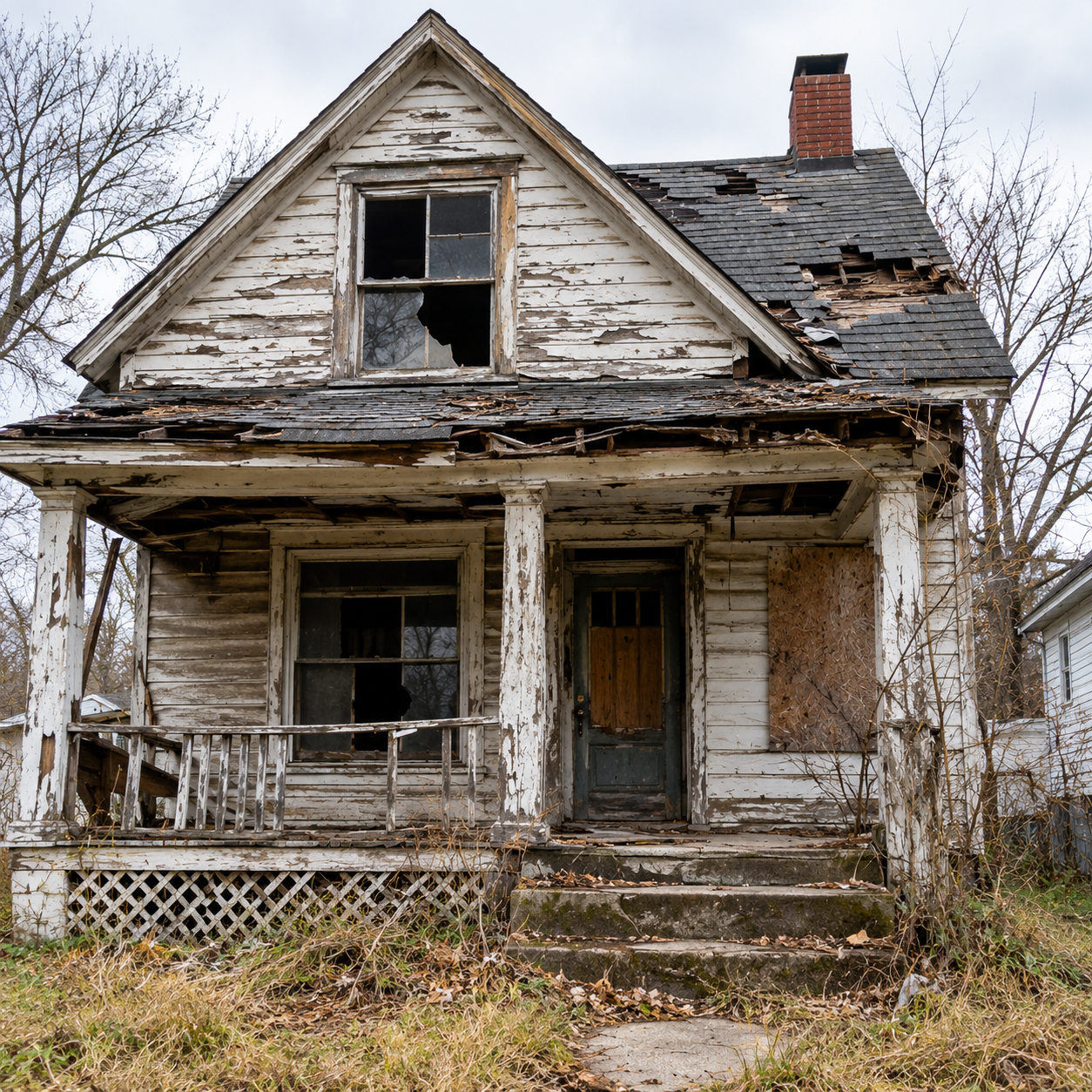
When homeowners think about what drives their home’s value, they usually think big: square footage, number of bedrooms, the kitchen remodel they’ve been dreaming about, or the neighborhood school district. What they often overlook is something far less glamorous but every bit as influential — deferred maintenance.
Deferred maintenance is the accumulation of small repairs and upkeep tasks that get postponed, often for years. Individually, none of them seems like a big deal. Collectively, they can take a meaningful bite out of your appraised value and complicate your financing.
Here’s a detailed look at how deferred maintenance shows up in an appraisal and the categories of maintenance appraisers pay the most attention to.

What Appraisers Actually Look For
An appraiser’s job is to develop an opinion of market value based on what a typical buyer would pay for your property in its current condition. Two houses on the same street, with identical floor plans and lot sizes, can appraise differently by tens of thousands of dollars based largely on condition.
During a typical inspection, an appraiser will:
– Walk the exterior, noting the condition of the roof, siding, foundation, windows, driveway, and grading
– Walk the interior room by room, noting flooring, walls, ceilings, fixtures, and finishes
– Check the mechanical systems — furnace, water heater, electrical panel, plumbing
– Look for evidence of water intrusion, pest activity, or structural movement
– Assign a condition rating that will be compared against similar sales in the area
Most appraisers use a standardized condition rating scale (commonly referred to as C1 through C6). A home with significant deferred maintenance may slide from a C3 to a C4 or C5. That rating change alone can shift value. Therefore the appraiser must then adjust your home downward relative to comparable sales that are in better shape.
Importantly, appraisers aren’t just subtracting the cost of repairs. Buyers typically discount a home by *more* than the cost to fix it, because they’re also pricing in hassle, uncertainty, and the risk that visible problems signal hidden ones.
The Major Categories of Deferred Maintenance
Roofing
The roof is the single most scrutinized exterior component. Appraisers look for curling or missing shingles, granule loss, sagging rooflines, moss growth, damaged flashing, and the condition of the gutters and downspouts.
A roof nearing the end of its life is a value killer for two reasons. First, it’s expensive to replace. Second, a failing roof threatens everything beneath it — sheathing, insulation, drywall, and framing. An appraiser may note a roof with less than a few years of remaining life. Lenders on certain loan types (FHA, VA, USDA) may require repairs before closing.
In West Michigan, roofs take a beating from freeze-thaw cycles and ice damming. Ice dams back water up under shingles and into soffits and attics, leaving stains that appraisers will absolutely notice.
Foundation and Structure
Appraisers look for horizontal or stair-step cracking in block and poured walls, bowing basement walls, uneven floors, doors and windows that don’t operate properly, and separation at corners or trim.
Not every crack is a crisis. Hairline shrinkage cracks in poured concrete are extremely common and generally benign. But an appraiser isn’t a structural engineer. Therefore, the safest professional move is to call it out and recommend inspection. That recommendation can stall a transaction and introduce doubt into the valuation.
Michigan’s clay-heavy soils and dramatic seasonal moisture swings make foundation movement a real problem. This is why drainage and grading matter so much (more on that below).
Water Intrusion and Moisture
Water is the most destructive force in a house. Appraisers are trained to look for its fingerprints: ceiling stains, efflorescence on basement walls, musty odors, warped flooring, peeling paint, rust at the base of appliances or water heaters, and visible mold.
Even a long-ago, fully repaired leak can hurt you if the staining was never painted over, because an appraiser documents what they see — not what you tell them about the history.
Common sources include roof leaks, failed window seals, ice dams, poor grading, clogged gutters, failed sump pumps, and plumbing supply or drain leaks.
Mechanical Systems: HVAC, Plumbing, Electrical
Appraisers note the age and apparent condition of the furnace, air conditioner, water heater, and electrical panel. A furnace that’s 28 years old, a rusted water heater, or a dangerous electrical panel could all be flagged.
Electrical issues deserve special attention because they’re also a safety and insurability matter. Knob-and-tube wiring, ungrounded two-prong outlets, missing GFCI protection in kitchens and bathrooms, exposed junction boxes, and undersized service panels are all common findings in older homes.
Plumbing concerns include galvanized supply lines, visible corrosion, slow drains, leaking shutoff valves, and non-functioning fixtures. Any fixture that doesn’t work will be noted.
Exterior: Siding, Windows, Trim, Paint
Peeling paint, rotted fascia and soffit, damaged or missing siding, failed caulking, and fogged double-pane windows all contribute to a lower condition rating. Peeling paint on a pre-1978 home can trigger lead-based paint concerns on government-backed loans.
The exterior is also where “curb appeal” and the appraiser’s first impression form. Fair or not, a home that looks neglected from the street creates an expectation of neglect inside.
Grading, Drainage, and Site Conditions
Negative grading (soil sloping toward the foundation), downspouts dumping water next to the house, clogged gutters, cracked and heaved driveways and walkways, deteriorating retaining walls, and overgrown vegetation touching siding are all deferred maintenance items.
Interior Finishes
Worn carpet, damaged or dated flooring, scuffed and dinged walls, cracked tile, damaged countertops, loose cabinet doors, and broken fixtures all read as deferred maintenance. Individually minor, these items compound quickly. An appraiser walking through a home with ten small cosmetic issues forms a very different impression than one walking through a home with none.
Safety and Code Items
Missing or non-functioning smoke and carbon monoxide detectors, loose or missing handrails and guardrails, broken steps, inoperable windows in bedrooms, missing covers on electrical boxes, and improperly vented appliances are all easy to spot and easy to fix — but they get flagged, and on certain loan programs they must be corrected before closing.
Garage, Deck, and Outbuildings
Rotting deck boards, loose railings, non-functioning garage door openers and safety sensors, deteriorating sheds, and unmaintained fencing are all part of the overall condition picture.
Deferred Maintenance and Valuation
Deferred maintenance is the quiet tax on homeownership. Every postponed repair compounds, both in the cost to eventually fix it and in the way it shapes an appraiser’s or buyer’s perception of the entire property. A home that has been consistently maintained reads as a home that has been cared for. That perception translates directly into a stronger condition rating and a stronger valuation.
The encouraging part is that the highest-impact fixes are often the least expensive ones. Clean gutters, proper drainage, working fixtures, fresh paint, and good documentation can meaningfully move the needle for a few hundred dollars and a couple of weekends.
If you’re looking for a quality, credible appraisal – Contact Michigan Home Appraisal today!




Leave a Reply
Your email is safe with us.