
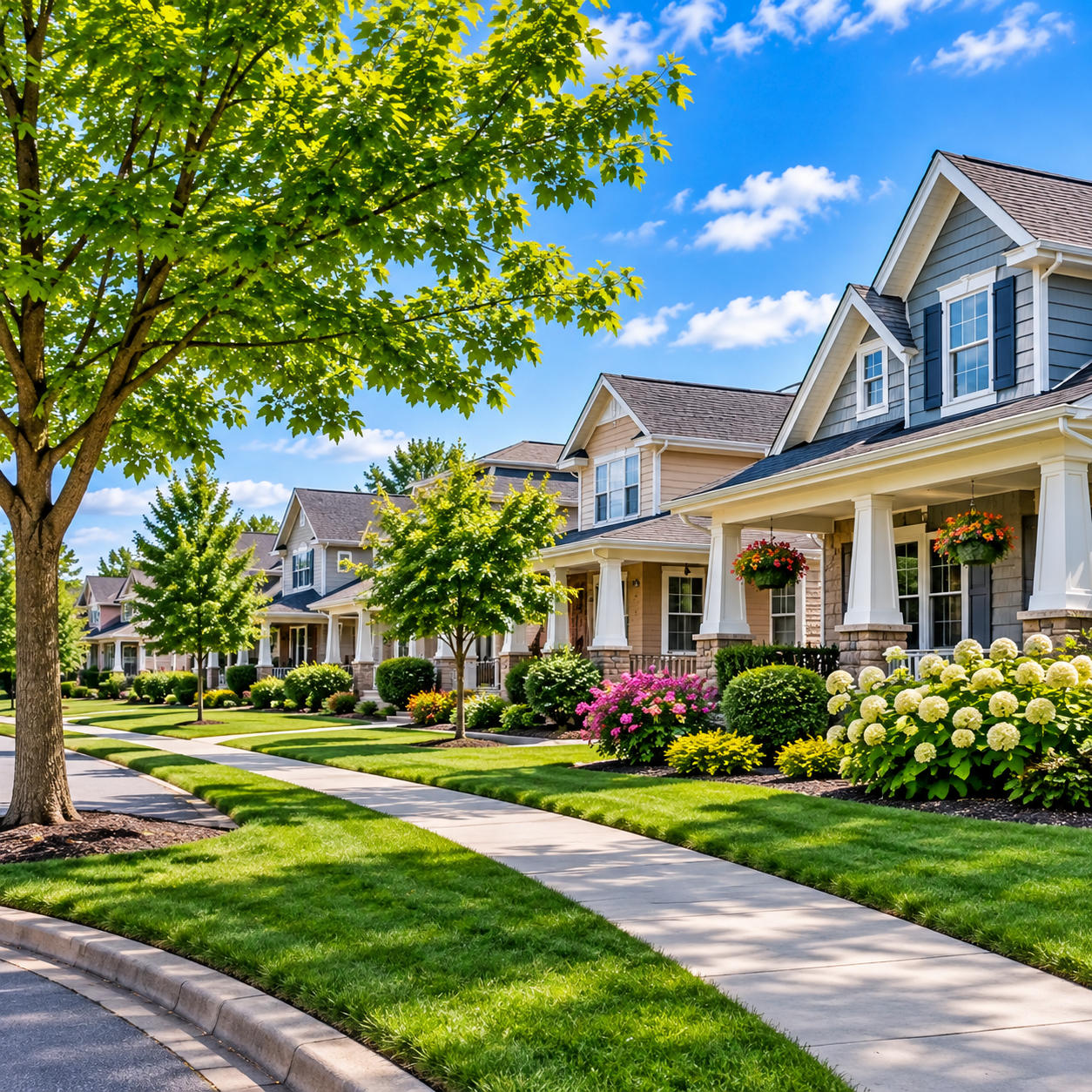
When determining the value of a home, most homeowners immediately think about the property’s size, condition, age, renovations, and features. While these characteristics certainly play an important role in determining market value, there is another equally important factor that can have a significant impact on an appraisal: the neighborhood surrounding the property. Neighborhood Changes Can Affect Property Values
A home’s value is influenced by much more than what is happening inside its walls. Changes in the surrounding community, including new businesses, infrastructure improvements, school developments, zoning changes, housing trends, and even shifts in buyer demand, can influence how much a property is worth.
In Michigan, where real estate markets can vary significantly from one community to another, understanding the relationship between neighborhood changes and property values is especially important.
Whether you own a home in Grand Rapids, Caledonia, Sparta, Greenville, Rockford, Cedar Springs, Ada, Grandville, Wyoming, Kentwood, Comstock Park or a smaller Michigan community, neighborhood characteristics can influence how buyers perceive your property and how an appraiser evaluates its market value.
So, how exactly do neighborhood changes affect property values from an appraisal standpoint? Let’s take a closer look.

Understanding the Relationship Between Neighborhoods and Property Values
A residential appraisal is not simply an evaluation of a home’s physical characteristics. It is an objective analysis of what a typical buyer would likely pay for a property in the current real estate market.
One of the first things an appraiser evaluates is the neighborhood in which the property is located.
This includes examining factors such as:
- The overall condition and appearance of surrounding homes.
- The types and styles of properties in the area.
- Proximity to schools, parks, shopping, and employment opportunities.
- Access to major roads and public transportation.
- Neighborhood development and construction activity.
- Local economic conditions.
- Supply and demand for residential properties.
- Zoning regulations and surrounding land uses.
- Environmental influences and potential nuisances.
These characteristics help an appraiser understand the property’s competitive market area and identify comparable properties that buyers would realistically consider as alternatives.
For example, two homes may have nearly identical square footage, bedroom counts, bathrooms, and interior finishes. However, if one is located in an established neighborhood with convenient access to shopping, parks, and employment centers while the other is located near an industrial area or a busy commercial corridor, the homes may have different market values.
The difference is not necessarily the homes themselves. It may be the influence of their surroundings.
In appraisal terminology, the neighborhood is an important part of understanding a property’s marketability and overall value.
New Businesses and Commercial Development Can Increase Property Values
One of the most noticeable changes that can occur within a neighborhood is new commercial development.
When businesses begin moving into an area, they can change how attractive that neighborhood becomes to prospective homeowners.
Examples include:
- Grocery stores and supermarkets.
- Restaurants and coffee shops.
- Retail shopping centers.
- Medical offices and healthcare facilities.
- Fitness centers and recreational businesses.
- Professional office spaces.
- Entertainment and hospitality businesses.
Convenient access to everyday services can make a neighborhood more desirable to certain buyers.
For example, imagine a residential neighborhood in Westland, Michigan, where a new shopping center opens nearby. Residents now have easier access to grocery stores, restaurants, and other everyday conveniences.
This development could improve the neighborhood’s appeal and potentially increase buyer demand.
From an appraisal standpoint, however, the existence of a new business does not automatically justify a higher property value.
The appraiser must determine whether buyers actually recognize and pay for the added convenience.
This is where comparable sales become particularly important.
If recent sales demonstrate that similar homes in areas benefiting from these amenities are selling at higher prices, the appraiser may find market support for a positive location influence.
On the other hand, if the development creates excessive traffic, noise, lighting, or congestion, it could have an unfavorable effect on nearby residential properties.
The important distinction is that an appraiser evaluates the actual market reaction rather than simply assuming that commercial development is beneficial.
Infrastructure Improvements Can Influence Neighborhood Desirability
Infrastructure improvements are another important factor that can affect residential property values throughout Michigan.
Cities and townships regularly invest in improvements designed to make communities more accessible, functional, and attractive.
These projects may include:
- Road resurfacing and street reconstruction.
- Sidewalk installations.
- Improved street lighting.
- New bike paths and walking trails.
- Public transportation improvements.
- Water and sewer system upgrades.
- Bridge improvements.
- Traffic management projects.
- Public park and recreational improvements.
These investments can make neighborhoods more convenient and appealing to residents.
For example, a neighborhood that previously had limited pedestrian access may become more attractive after sidewalks and walking paths are installed.
Similarly, improved road access may make commuting easier for residents who travel to nearby employment centers.
In Michigan communities, improvements to roads, drainage systems, public utilities, and recreational spaces can also help support long-term neighborhood stability.
From an appraisal perspective, the appraiser considers whether these improvements have influenced market demand and whether that influence is reflected in comparable property sales.
It is important to understand that not every infrastructure improvement creates an immediate increase in value.
Some improvements simply maintain existing neighborhood conditions rather than creating a measurable increase in market value.
The appraiser’s responsibility is to analyze the available evidence and determine whether buyers are paying more, less, or approximately the same amount because of the change.
School Districts and Educational Opportunities Can Affect Home Values
School districts are frequently an important consideration for homebuyers, particularly those purchasing properties for long-term occupancy.
In Michigan, school district boundaries can have a noticeable influence on residential real estate markets.
A neighborhood’s proximity to desirable educational opportunities, changes in school facilities, and investments in educational infrastructure may influence buyer demand.
Some factors appraisers may consider include:
- Changes in school district boundaries.
- New school construction.
- Renovations to existing school facilities.
- Changes in educational programs.
- Proximity to public and private schools.
- Access to educational and recreational facilities.
For example, two homes located only a few streets apart may have different school district assignments. Depending on the preferences of buyers in that particular market, this distinction could influence the homes’ competitive positions.
However, appraisers cannot simply assume that one school district is more valuable than another. They must evaluate market evidence to determine whether buyers demonstrate a measurable preference.
It is also important to distinguish between objective neighborhood characteristics and protected characteristics. An appraisal must never base its value conclusion on the race, religion, national origin, disability, familial status, or other protected characteristics of neighborhood residents.
The focus must remain on legitimate property and market influences.
New Residential Construction Can Change Neighborhood Values
New construction is another development that can have a significant impact on surrounding property values.
When builders begin developing vacant land or replacing older properties with new homes, the overall character of a neighborhood can change.
Depending on the location and type of development, new construction can have either a positive or negative influence on existing properties.
Neighborhood Changes Can Affect Property Values.
Potential positive effects include:
- Increased buyer interest in the neighborhood.
- Improved neighborhood appearance.
- Additional housing options.
- New infrastructure and utilities.
- Increased investment in surrounding properties.
- Greater demand for nearby homes.
Potential negative effects include:
- Construction noise and disruption.
- Increased traffic.
- Loss of open space.
- Changes in neighborhood density.
- Competition from newer homes with modern features.
- Changes in the area’s established residential character.
Consider an established neighborhood in Oakland County where a builder begins constructing new homes on previously vacant land.
If the new homes are consistent with the surrounding residential properties and attract additional buyers, the development could strengthen the neighborhood’s market appeal.
However, existing homes may also face increased competition from newly constructed properties offering modern layouts, energy-efficient systems, and updated finishes.
An appraiser must consider whether the new construction is truly competitive with the subject property.
A newly built 3,000-square-foot home should not automatically be treated as a comparable sale for an older 1,400-square-foot ranch simply because both properties are located nearby.
The appraiser must evaluate similarities in design, size, quality, condition, location, and buyer appeal.
Zoning Changes and Land Use Can Have a Significant Impact
Zoning is an important consideration in real estate appraisal because it determines how properties and surrounding land may legally be used.
In Michigan, local municipalities establish zoning regulations that help control residential, commercial, industrial, and mixed-use development.
When zoning regulations change, the potential use and desirability of nearby properties may also change.
For example, consider a residential neighborhood where a vacant parcel has historically been zoned for single-family residential use.
If the municipality changes the zoning to allow commercial development, the surrounding properties could experience a change in market perception.
Some homeowners may appreciate having additional businesses and services nearby. Others may be concerned about traffic, noise, parking, or increased activity.
Other zoning changes may allow:
- Higher-density residential development.
- Multi-family housing.
- Mixed-use developments.
- Commercial redevelopment.
- Accessory dwelling units.
- Expanded building opportunities.
From an appraisal standpoint, zoning changes require careful analysis.
An appraiser considers the existing zoning, surrounding land uses, legal restrictions, and the potential influence on the property’s highest and best use.
A zoning change does not automatically increase the value of every nearby property.
The appraiser must determine whether the change creates a measurable benefit or disadvantage in the marketplace.
Negative Neighborhood Changes Can Reduce Property Values
While neighborhood improvements can create opportunities for increased property values, negative changes can also affect a home’s marketability.
Some neighborhood conditions may make buyers less interested in purchasing homes in a particular area.
Examples include:
- Increased industrial activity near residential properties.
- Abandoned or poorly maintained buildings.
- Excessive traffic congestion.
- Deteriorating public infrastructure.
- Increased noise or unpleasant odors.
- Environmental contamination.
- Nearby land uses that create unwanted disturbances.
- Declining availability of essential neighborhood services.
For example, imagine a residential property located near a quiet commercial area.
Over time, an industrial operation expands nearby, resulting in increased truck traffic, noise, and activity throughout the day.
Even if the home itself remains in excellent condition, the surrounding changes may influence how prospective buyers view the property.
From an appraisal perspective, these influences must be evaluated objectively.
The appraiser should investigate whether the surrounding condition affects buyer demand, marketing time, or sale prices.
If comparable sales demonstrate that properties exposed to a particular adverse influence sell for less than otherwise similar properties, that evidence may support an appropriate adjustment.
However, an appraiser should not automatically reduce a home’s value simply because an unfavorable condition exists nearby. The effect must be supported by credible market evidence.
In our next blog post, we’ll continue this in depth look at what other neighborhood changes can affect property values.
At Michigan Home Appraisal, we understand that determining a property’s value involves much more than looking at the home itself. Neighborhood characteristics, local market conditions, comparable sales, and surrounding developments all play an important role in the appraisal process.
Whether you are buying, selling, refinancing, settling an estate, handling a divorce, or simply need an accurate understanding of your property’s current market value, having a knowledgeable appraisal professional can make a difference.
We recognize that every Michigan neighborhood has its own characteristics, market influences, and real estate trends. A careful, objective appraisal helps ensure that these factors are appropriately considered.
If you need a professional home appraisal in Michigan, consider Michigan Home Appraisal. We are here to help you better understand your property’s value with an appraisal grounded in market data, professional analysis, and an understanding of Michigan real estate.
Visit Michigan Home Appraisal to learn more about our appraisal services and how we can help with your property valuation needs.




Leave a Reply
Your email is safe with us.