
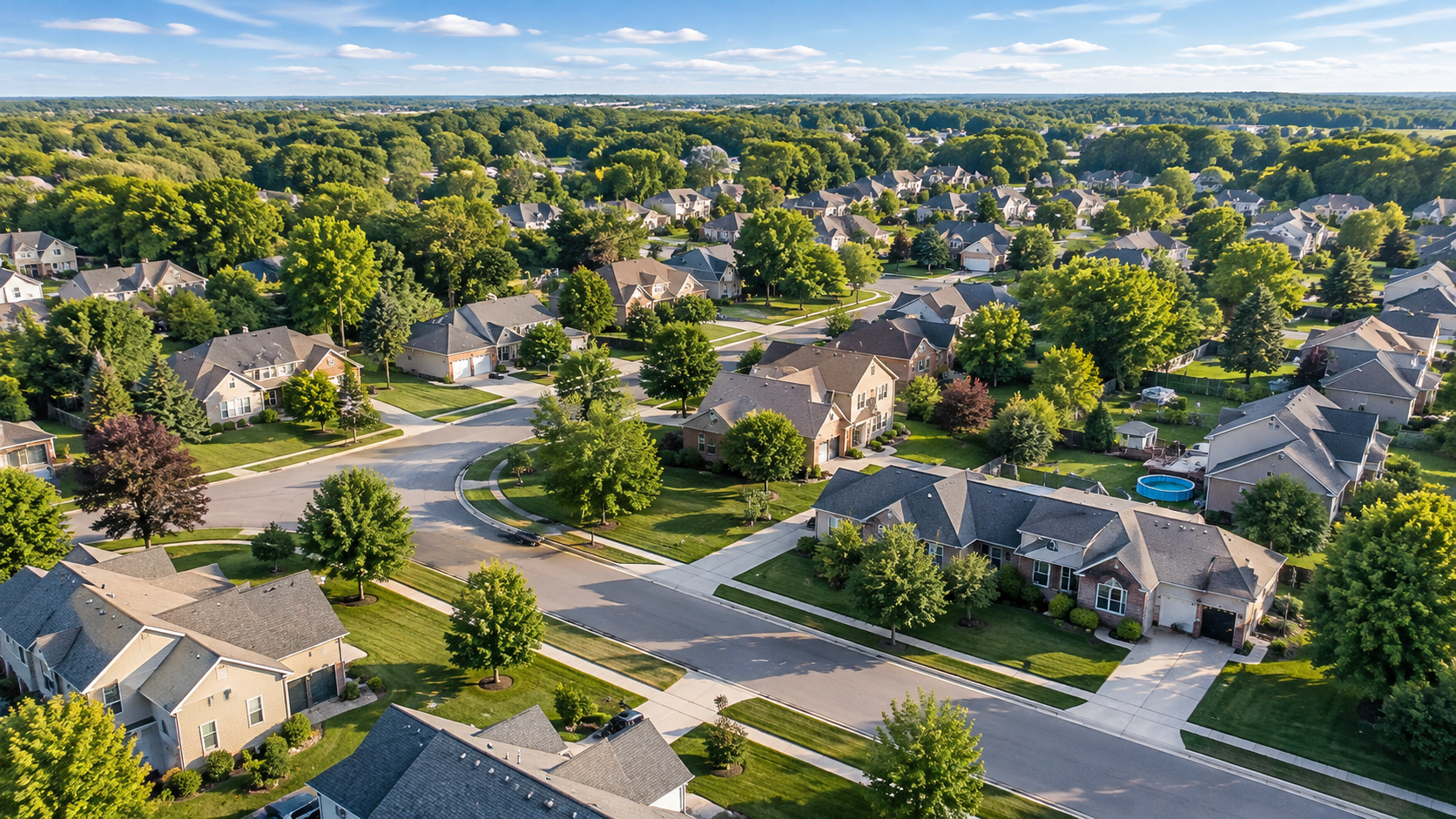
When determining the value of a home, most homeowners immediately think about the property’s size, condition, age, renovations, and features. While these characteristics certainly play an important role in determining market value, there is another equally important factor that can have a significant impact on an appraisal: the neighborhood surrounding the property.
A home’s value is influenced by much more than what is happening inside its walls. Changes in the surrounding community, including new businesses, infrastructure improvements, school developments, zoning changes, housing trends, and even shifts in buyer demand, can influence how much a property is worth.
In Michigan, where real estate markets can vary significantly from one community to another, understanding the relationship between neighborhood changes and property values is especially important. Neighborhood changes can affect property value.
Whether you own a home in Grand Rapids, Rockford, Kentwood, Byron Center, Grandville, Jenison, Hudsonville, Cedar Springs, Grant, Newaygo, Sparta, Comstock Park, Ada, Greenville, Lowell, or a smaller Michigan community, neighborhood characteristics can influence how buyers perceive your property and how an appraiser evaluates its market value.
So, how exactly do neighborhood changes affect property values from an appraisal standpoint? Let’s take a closer look.

Changes in Neighborhood Demand and Buyer Preferences
Neighborhoods do not remain the same forever. Buyer preferences change, employment opportunities shift, and different types of housing become more or less desirable over time.
These changes can influence property values even when there are no major physical developments within the neighborhood.
For example, some buyers may increasingly prioritize:
- Walkability.
- Access to restaurants and entertainment.
- Proximity to major employment centers.
- Home office space.
- Access to public transportation.
- Outdoor recreational opportunities.
- Larger yards and outdoor living areas.
- Lower-maintenance housing.
A neighborhood that previously attracted buyers primarily interested in larger suburban homes may begin attracting buyers who prefer smaller homes closer to shopping, restaurants, and employment opportunities.
This change in buyer demand can influence the prices that properties command.
Michigan has many different types of housing markets, from established Detroit-area neighborhoods to suburban communities and rural residential areas.
An appraiser must recognize that buyer preferences are not identical throughout the state.
For instance, a property near downtown Grand Rapids may appeal to buyers for reasons that differ significantly from those influencing demand for a rural home in northern Michigan.
The appraiser’s job is to understand the preferences of the buyers who are actually competing for the subject property.
How Appraisers Measure the Impact of Neighborhood Changes
One of the most important aspects of a residential appraisal is the sales comparison approach.
This approach involves analyzing recently sold properties that are similar to the subject property and making appropriate adjustments for relevant differences.
When neighborhood changes occur, the appraiser must determine whether those changes have influenced the sales prices of comparable properties.
Here are several ways this analysis is performed.
Comparable Sales Analysis
The appraiser researches recent sales of similar properties within the subject property’s competitive market area.
The goal is to identify properties that reflect the same general market influences and would reasonably compete for similar buyers.
For example, if a neighborhood has experienced substantial commercial redevelopment, the appraiser may examine sales occurring before and after that development.
The analysis may help determine whether the changes have influenced market prices.
Market Trend Analysis
Appraisers also examine broader market conditions, including:
- Recent sale prices.
- Active listings.
- Pending transactions.
- Inventory levels.
- Days on market.
- Sale-to-list-price ratios.
- Changes in buyer demand.
These indicators help determine whether property values are increasing, declining, or remaining relatively stable.
Importantly, a neighborhood can experience new development while property values remain stable. Development alone does not establish an upward market trend.
Neighborhood Boundary Analysis
An appraiser must also determine which properties actually belong to the subject property’s competitive neighborhood or market area.
This is particularly important in Michigan communities where housing styles, property conditions, and market demand can change significantly over relatively short distances.
A nearby property is not automatically a good comparable sale.
In some cases, a property located several miles away may be more comparable than one located just a few blocks away.
The most appropriate comparable properties are those that compete for the same pool of buyers and reflect similar market influences.
Why Neighborhood Boundaries Matter in Michigan Appraisals
One commonly misunderstood part of the appraisal process is how an appraiser determines neighborhood boundaries.
Many homeowners assume that comparable sales must come from the same subdivision, street, or immediate surrounding area.
Although nearby sales can be useful, proximity alone does not determine whether a property is a good comparable.
For example, consider two neighborhoods in Wayne County:
- Neighborhood A consists primarily of older ranch-style homes with smaller lots.
- Neighborhood B consists primarily of newer colonial-style homes with larger lots and different property features.
Even if these neighborhoods are directly adjacent to one another, they may attract different buyers and have different market values.
An appraiser must identify the appropriate market area based on the characteristics of the subject property and the purchasing decisions of typical buyers.
This is especially important in Michigan, where older established neighborhoods, newer subdivisions, rural properties, and mixed-use communities can exist within close proximity.
Proper neighborhood analysis helps ensure that the appraisal reflects the property’s actual competitive market rather than relying on arbitrary geographic boundaries.
The Difference Between Market Value and Michigan Property Tax Assessments
Another important consideration for Michigan homeowners is understanding the difference between a private residential appraisal and a local property tax assessment.
Although both involve determining property value, they serve different purposes.
A private appraisal generally provides an independent opinion of market value as of a specific effective date. It may be requested for a mortgage, refinancing, estate planning, divorce, buying or selling a home, or other financial purposes.
Michigan property tax assessments are handled through local assessing authorities.
Michigan uses several valuation concepts:
- True Cash Value: Generally represents the property’s market value.
- Assessed Value: Generally established at 50% of true cash value.
- State Equalized Value (SEV): The assessed value after applicable county and state equalization.
- Taxable Value: The value used to calculate property taxes, subject to Michigan’s Proposal A limitations and applicable exceptions.
Neighborhood changes can influence the market value recognized through the assessment process, even when homeowners have not made any physical improvements to their properties.
For example, if comparable homes in a particular Michigan neighborhood begin selling for higher prices, local assessing authorities may recognize that change when determining assessed values.
However, taxable value does not necessarily increase at the same rate as market value.
This distinction is important because homeowners sometimes assume that an increase in assessed value automatically means their home’s market value has increased by the same percentage.
Understanding these differences can help Michigan homeowners make more informed decisions when reviewing their property assessments or requesting an independent appraisal.
Why an Accurate Neighborhood Analysis Is Important for Homeowners
A thorough neighborhood analysis helps ensure that a property is evaluated based on the conditions that actually influence its market value because neighborhood changes can affect property value.
This is especially important when a neighborhood is experiencing significant changes.
For homeowners, an accurate appraisal can provide valuable insight when:
- Selling a property.
- Refinancing an existing mortgage.
- Removing private mortgage insurance (PMI), when applicable.
- Settling an estate or inheritance.
- Handling a divorce or property settlement.
- Challenging a property tax assessment.
- Establishing a property’s value for financial planning.
- Evaluating an investment property.
- Determining the value of a home following neighborhood redevelopment.
For example, a homeowner may believe their property has increased in value because a new shopping center, park, or residential development has opened nearby.
While these improvements may contribute to increased market appeal, an appraisal helps determine whether that additional desirability is reflected in actual real estate transactions.
Likewise, homeowners in neighborhoods experiencing negative changes may benefit from understanding how those conditions influence market value.
An accurate appraisal should consider both positive and negative influences while remaining objective and supported by market data.
What Michigan Homeowners Should Know Before Ordering an Appraisal
If you are preparing to have your home appraised, there are several steps you can take to help the appraiser understand your property and its surroundings.
1. Identify recent neighborhood improvements.
Make the appraiser aware of significant developments, such as new parks, commercial projects, road improvements, or nearby residential construction.
2. Provide information about unique neighborhood features.
If your property benefits from a particular location feature, such as access to a walking trail, waterfront area, or recreational facility, make sure that information is available.
3. Document relevant property improvements.
Although the appraisal focuses on the entire property and its market, information about renovations, additions, and upgrades can help the appraiser understand the home’s characteristics.
4. Share relevant information about surrounding conditions.
If there have been significant changes in nearby land use, zoning, traffic patterns, or commercial activity, providing accurate information can help guide the appraiser’s research.
5. Understand that the final value must be supported by market evidence.
An appraiser cannot simply increase a home’s value because a neighborhood appears to be improving. Likewise, a negative neighborhood change does not automatically justify a reduction.
The final opinion of value must reflect the available market evidence as of the appraisal’s effective date.
Final Thoughts: Neighborhood Changes Matter More Than Many Homeowners Realize
A property’s value is influenced by much more than its square footage, bedrooms, bathrooms, and interior condition. Neighborhood changes can affect property value.
The surrounding neighborhood plays an important role in determining how buyers perceive a property, how much demand exists for similar homes, and what buyers are ultimately willing to pay.
In Michigan, neighborhood changes can take many forms. New businesses, road improvements, school developments, residential construction, zoning changes, and shifting buyer preferences can all influence local real estate markets.
However, not every neighborhood improvement translates into a higher appraisal, and not every unfavorable change results in a lower value.
The key is understanding how these changes affect actual buyer behavior and whether that influence can be demonstrated through comparable sales and other reliable market data.
A professional appraisal considers these factors carefully to develop an independent, well-supported opinion of market value.
Need a Professional Home Appraisal in Michigan?
Michigan Home Appraisal
Neighborhood Changes Can Affect Property Value.
At Michigan Home Appraisal, we understand that determining a property’s value involves much more than looking at the home itself. Neighborhood characteristics, local market conditions, comparable sales, and surrounding developments all play an important role in the appraisal process.
Whether you are buying, selling, refinancing, settling an estate, handling a divorce, or simply need an accurate understanding of your property’s current market value, having a knowledgeable appraisal professional can make a difference.
We recognize that every Michigan neighborhood has its own characteristics, market influences, and real estate trends. A careful, objective appraisal helps ensure that these factors are appropriately considered.
If you need a professional home appraisal in Michigan, consider Michigan Home Appraisal. We are here to help you better understand your property’s value with an appraisal grounded in market data, professional analysis, and an understanding of Michigan real estate.
Visit Michigan Home Appraisal to learn more about our appraisal services and how we can help with your property valuation needs.




Leave a Reply
Your email is safe with us.