
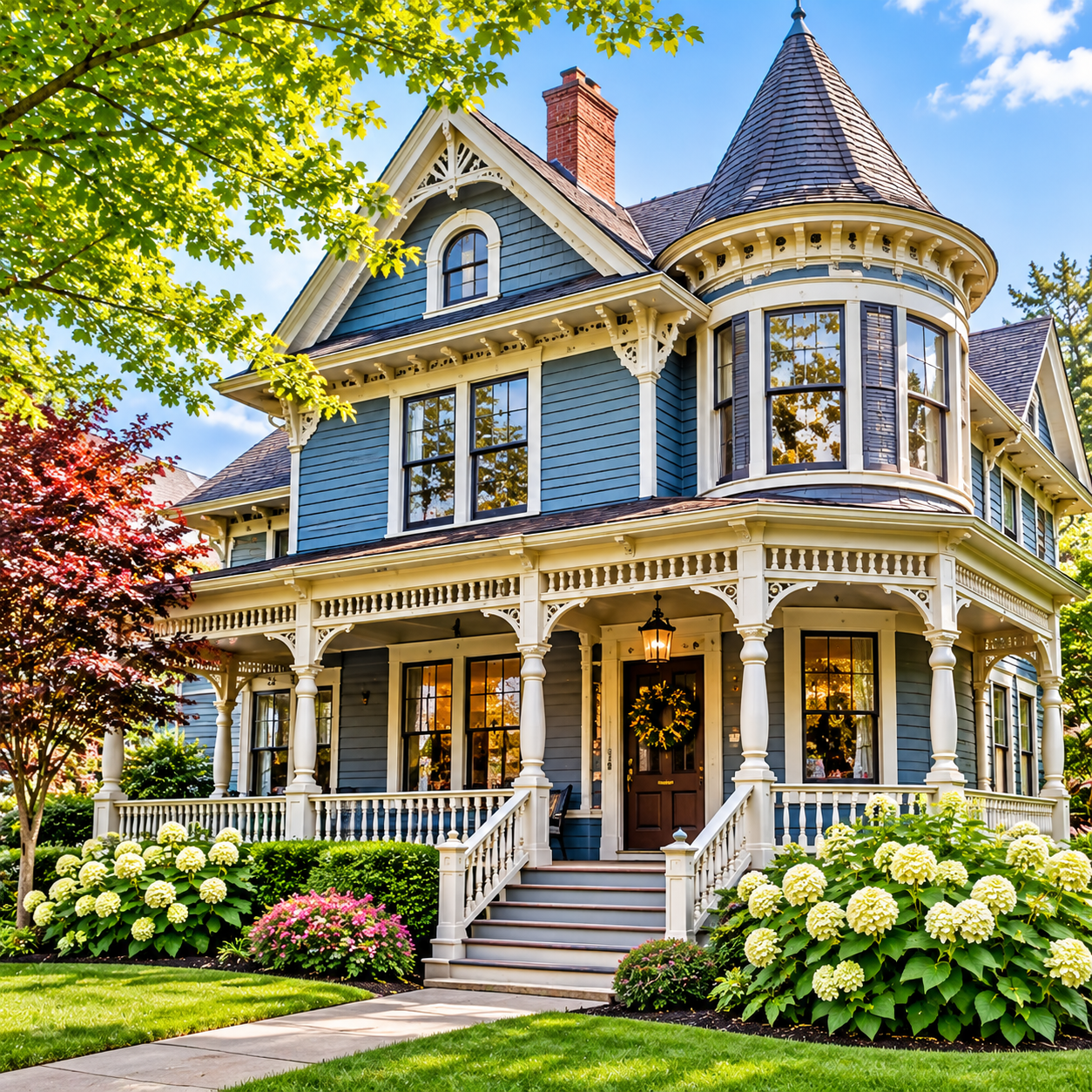
Historic homes have a character and sense of craftsmanship that can make them especially desirable to buyers. From Victorian houses and Craftsman bungalows to mid-century properties and century-old farmhouses, historic homes can offer architectural details and construction quality that are difficult to replicate in newer construction. Today we’ll discuss historic home appraisals.
But how does an appraiser determine the value of a historic home?
Appraising a historic property can require more research and analysis than appraising a typical home. An appraiser must consider the home’s age, architectural style, condition, updates, historical significance, location, and the way buyers in the local market respond to those characteristics. The goal is not simply to place a premium on a home because it is old. Instead, the appraiser must determine how the property’s unique characteristics contribute to its market value.

Age Alone Does Not Make a Home Historic
One of the first things to understand is that an older home isn’t automatically considered a historic property.
Age is certainly an important characteristic, but historical significance can also involve architecture, association with important people or events, construction techniques, and the property’s physical integrity. The City of Ann Arbor, for example, notes that historic resources are typically at least 50 years old and are evaluated based on factors including design, materials, workmanship, location, setting, feeling, and association.
For an appraiser, this distinction matters because a 100-year-old house that has been extensively altered may have a very different market position than a 100-year-old house that retains much of its original character.
What Makes Historic Homes Different?
Historic homes often contain features that aren’t commonly found in newer houses.
These may include:
- Original hardwood floors
- Decorative woodwork and trim
- Built-in cabinetry
- Stained-glass windows
- Original fireplaces
- Historic masonry
- Custom millwork
- Unique floor plans
- Detailed exterior architecture
- Original doors and windows
- Period-specific construction details
These features can contribute to a home’s appeal, particularly when buyers value historic character.
However, an appraiser doesn’t simply add a dollar amount for every historic feature. The important question is whether the local market recognizes and pays for those features.
For example, if comparable historic homes with original woodwork consistently sell for more than otherwise similar properties without those features, the sales data can provide evidence that the characteristic contributes to value.
Comparable Sales Are Especially Important with Historic Home Appraisals
The sales comparison approach is often an important part of residential real estate appraisal. An appraiser researches recently sold properties that are reasonably comparable to the subject property and analyzes the similarities and differences between them.
Historic homes can make this process more complicated.
A 1920s Craftsman home may not be directly comparable to a recently constructed suburban house, even if both have similar square footage. Likewise, a historic Victorian with elaborate architectural details may compete in a completely different market segment than a basic older home nearby.
The appraiser may need to search farther geographically or use older sales when appropriate if there are relatively few truly comparable historic properties.
The key is finding sales that reflect the market in which the subject property competes.
Appraisal guidance emphasizes that market-derived data and property-specific analysis should support the value conclusion. Appraisal Institute
Location Can Have a Major Impact with Historic Home Appraisals
Historic homes are often located in established neighborhoods close to downtown areas, older commercial districts, parks, schools, and other desirable amenities.
Location can therefore be an important component of their value.
In Grand Rapids, for example, historic neighborhoods have their own distinctive characteristics and buyer appeal. Heritage Hill is one well-known example of a historic neighborhood where preservation and architectural character are important parts of the area’s identity.
Michigan research has also examined the relationship between historic district designation and residential property values. A study covering Ann Arbor, Bay City, Grand Rapids, and Kalamazoo found that designated historic districts generally had higher property values than comparable non-designated areas, although the degree of difference varied. mhpn.org
This doesn’t mean that every historic home automatically receives a premium. Instead, it demonstrates why understanding the specific market is important when appraising these properties.
Historic District Designation Can Matter
Another factor an appraiser may need to investigate is whether a property is located within a designated historic district.
Historic district designation can affect what owners are permitted to do with their properties. Depending on the applicable local regulations, certain exterior alterations, additions, repairs, or demolitions may be subject to review.
Michigan’s Local Historic Districts Act allows local governments to regulate certain activities involving historic resources within designated districts, with purposes that include preserving historic resources and stabilizing or improving property values. Michigan Legislature
From an appraisal perspective, these restrictions can be relevant because they may affect how a property can be used, modified, or improved.
An appraiser needs to understand the market implications of those restrictions rather than assuming that historic designation is automatically positive or negative.
Condition Is Extremely Important
A historic home can have tremendous character and still have significant condition issues.
Older homes may have deferred maintenance or outdated systems involving plumbing, electrical, heating, roofing, foundations, windows, or other components.
An appraiser considers the overall condition of the property and how that condition compares with competing properties.
For example, two 100-year-old homes may look similar from the street but have dramatically different values if one has been comprehensively renovated while the other requires extensive repairs.
A beautifully restored historic property may appeal to buyers who want historic character without taking on a major renovation project.
Conversely, a property that requires substantial repairs may appeal primarily to buyers willing to undertake a restoration.
The appraiser’s responsibility is to analyze how the market responds to those differences.
Renovations Can Help—or Change the Character of the Home
Updating a historic home can be a delicate balance.
Modern buyers may want updated kitchens, bathrooms, heating systems, insulation, windows, and electrical systems. At the same time, removing original architectural features can potentially diminish some of the character that makes the property desirable.
From an appraisal standpoint, the important issue is again market reaction.
A high-quality renovation that improves functionality while preserving desirable historic characteristics may make the property more competitive.
However, an expensive renovation does not necessarily result in an equal increase in market value.
Appraisers generally don’t simply add the cost of every improvement to the value of a property. Instead, they analyze how buyers in that particular market respond to the improvements.
The Cost Approach Can Be More Challenging with Historic Home Appraisals
Another consideration with historic homes is the cost approach.
The cost approach considers the cost to reproduce or replace improvements, less depreciation, plus the value of the land. While this approach can be useful in certain assignments, reproducing a historic home’s craftsmanship may be difficult to estimate.
Imagine a home containing custom millwork, hand-built cabinetry, ornate plasterwork, or unusual masonry.
Replacing those features today may cost considerably more than constructing a standard modern home.
This is one reason the sales comparison approach and market evidence can be particularly important when determining the value of an existing historic residence.
The appropriate valuation approaches depend on the assignment and the available data. USPAP establishes generally recognized ethical and performance standards for the appraisal profession, and state-licensed and certified appraisers must comply with applicable standards. The Appraisal Foundation
Historic Doesn’t Necessarily Mean Expensive
Another common misconception is that older or historic homes are automatically worth more.
That’s not necessarily true.
A historic home may have tremendous character but still have a lower market value than a newer home if it is significantly smaller, requires substantial repairs, has an inferior location, or lacks features buyers currently demand.
Likewise, a modest historic home in an excellent neighborhood can be highly desirable.
The appraisal is ultimately about market value, not simply age or historical importance.
Why Hiring an Experienced Appraiser Matters with Historic Home Appraisals
Historic properties can present unique appraisal challenges because they often don’t fit neatly into standard categories.
An experienced appraiser must be able to identify relevant comparable sales, understand the local market, recognize important architectural characteristics, investigate potential restrictions, and determine how buyers respond to the property’s unique features.
This is particularly important when an appraisal is needed for refinancing, estate planning, divorce, a sale, tax-related matters, or other financial and legal decisions.
A professional appraisal provides an independent opinion of value supported by market research and analysis rather than relying solely on an online estimate or a property’s purchase price.
Need a Grand Rapids Historic Home Appraisal?
If you own a historic home in Grand Rapids or the surrounding West Michigan area, determining its market value may require more than simply comparing square footage and bedroom counts.
Michigan Home Appraisal provides professional residential appraisal services in Grand Rapids and surrounding communities. Whether you own a historic property, are considering refinancing, are preparing to sell, or need an appraisal for an estate or other financial purpose, an experienced appraiser can analyze the property’s unique characteristics and the local market.
Contact Michigan Home Appraisal today to schedule a professional appraisal for your historic home in Grand Rapids, Michigan.




Leave a Reply
Your email is safe with us.