
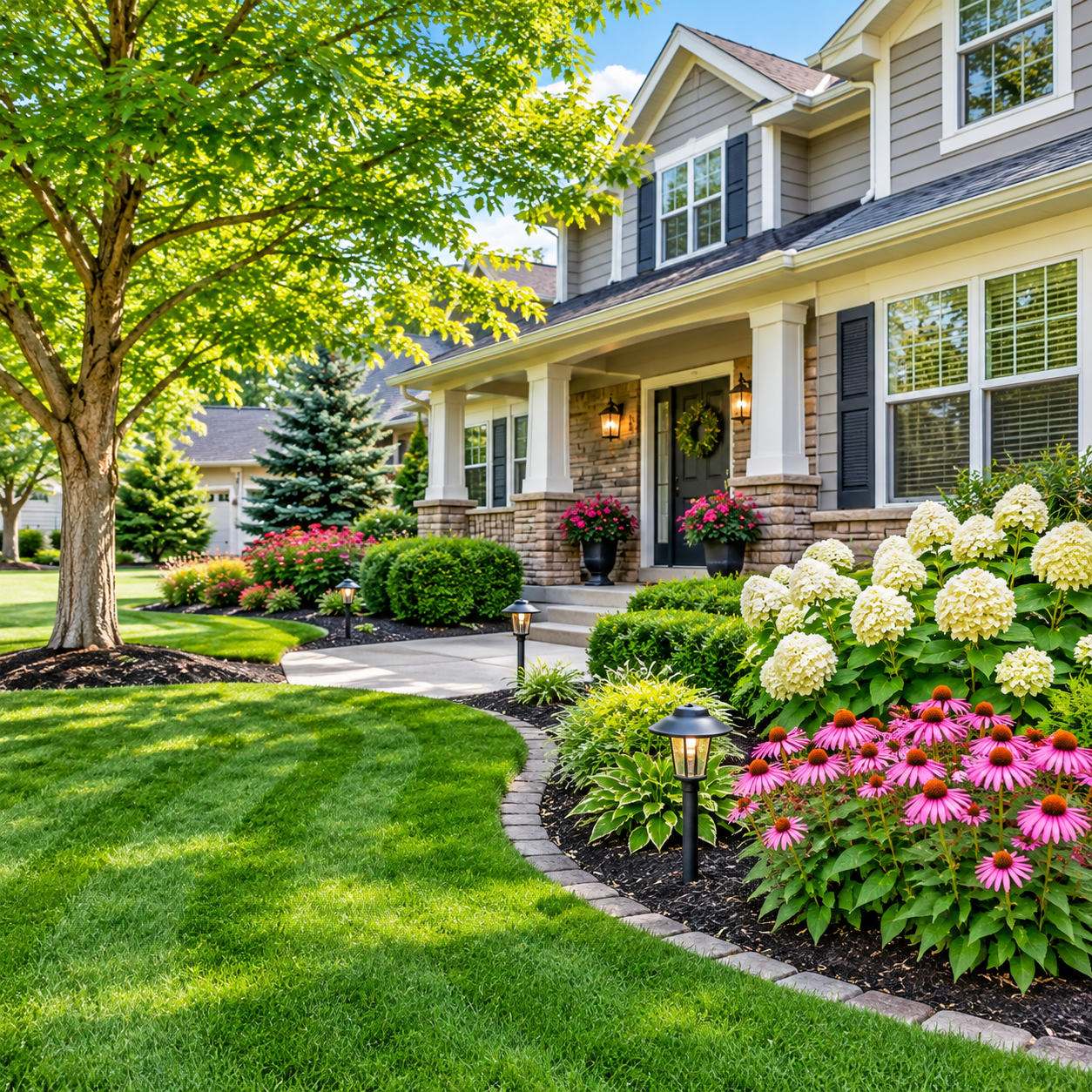
When homeowners think about increasing property value, they often focus on major improvements such as kitchen renovations, bathroom updates, finished basements, or new roofing. However, the exterior of a property can also play an important role in how buyers perceive a home—and, in some cases, how an appraiser analyzes its market value. Let’s discuss further how landscaping can affect property value.
Landscaping is one of the most noticeable aspects of a property’s exterior. A well-maintained yard, mature trees, attractive planting beds, and functional outdoor spaces can make a home more appealing. On the other hand, neglected landscaping, overgrown vegetation, damaged trees, or poorly designed outdoor improvements can detract from a property’s overall appeal.
From an appraisal standpoint, however, landscaping is not simply a matter of deciding how much money a homeowner spent on plants and outdoor improvements. An appraiser’s job is to determine how the market reacts to the property’s features and condition. Landscaping may contribute to value when it provides benefits that typical buyers recognize, but the amount of value it contributes can vary significantly from one property to another.

What Does an Appraiser Look at When Evaluating Landscaping?
A residential appraiser considers numerous characteristics of a property, including the site, improvements, condition, location, and features that may influence marketability. Landscaping can be part of this overall analysis.
The important distinction is that an appraiser generally isn’t assigning a dollar-for-dollar value to every tree, flower bed, shrub, or landscaping project. Instead, the appraiser considers the property’s overall appeal and how its exterior features compare with those of similar properties. The sales comparison approach is commonly used in residential appraisals. This involves analyzing recently sold properties that compete with the subject property in the same market. Differences between the properties—including site characteristics and landscaping—may be considered when determining the appropriate adjustments and final opinion of value. In other words, landscaping matters when it matters to the market.
Curb Appeal Can Influence Buyer Perception
One of the most obvious ways landscaping can affect a property is through curb appeal.
A property with a neatly maintained lawn, trimmed shrubs, healthy trees, attractive landscaping beds, and a well-maintained driveway may create a more positive first impression than a similar property with an overgrown or neglected yard.
While curb appeal does not automatically translate into a specific dollar amount on an appraisal, it can influence how buyers perceive the property. A home that looks well maintained from the street may be more attractive to potential buyers and may compete more effectively with other homes on the market.
An appraiser considers the property as a whole. If the landscaping contributes to the overall condition, appeal, and marketability of the home, that can be relevant to the valuation process.
However, homeowners should not assume that spending $20,000 on landscaping will automatically increase an appraisal by $20,000.
The relationship between cost and contributory value is not necessarily one-to-one.
Mature Trees Can Be an Important Property Feature
Trees can have a particularly interesting relationship with property value.
Large, mature trees can provide shade, privacy, visual appeal, and a sense of established character. In some neighborhoods, mature trees are an important part of the area’s appeal.
A well-placed mature tree may provide benefits that a newly planted tree cannot immediately replicate. It can provide shade over a patio, screen a neighboring property, frame the house, or contribute to the overall appearance of the lot.
Research cited in a Michigan landscape appraisal case referenced the possibility that well-maintained landscapes can contribute meaningfully to residential property value and that mature, appropriately placed trees can have contributory value.
That doesn’t mean every large tree increases value. Location and condition matter.
A healthy shade tree in the backyard may be an attractive feature. A diseased tree leaning toward the house may be viewed very differently. Likewise, trees that block important views, interfere with structures, or create maintenance concerns may not provide the same positive contribution.
Landscaping Condition Matters
Landscaping can affect property value and the condition of the landscaping is another factor an appraiser may observe.
A property doesn’t necessarily need elaborate landscaping to have good value. In many cases, simple landscaping that is clean, functional, and appropriate for the property can be more beneficial than an expensive but poorly maintained landscape.
Examples of positive exterior characteristics may include:
- A properly maintained lawn
- Healthy and appropriately placed trees
- Trimmed shrubs
- Defined planting beds
- Functional walkways
- Well-maintained patios or decks
- Attractive front-yard landscaping
- Appropriate privacy screening
- Landscaping that complements the architecture of the home
On the other hand, problems can include severely overgrown vegetation, dead trees, neglected lawns, damaged retaining walls, or landscaping that creates drainage or maintenance concerns.
The key consideration is how these characteristics affect the property’s overall condition and market appeal.
Over-Landscaping Can Also Be a Problem
More landscaping isn’t necessarily better.
A homeowner may invest heavily in elaborate gardens, extensive hardscaping, fountains, outdoor structures, or specialized landscaping features. These improvements may provide significant enjoyment to the owner, but that doesn’t guarantee that buyers in the market will pay enough extra to recover the cost.
This is an important concept in real estate appraisal: cost does not necessarily equal value.
For example, a homeowner might spend $30,000 installing a highly customized backyard landscape. If comparable homes in the area generally have simple yards, buyers may not place an additional $30,000 of market value on that particular improvement.
Landscaping and Outdoor Living Spaces
Landscaping becomes particularly interesting when it creates usable outdoor living space.
Patios, decks, outdoor kitchens, fire pits, seating areas, and attractive landscaping can make a backyard more functional. If buyers in a particular market place a premium on outdoor living, these features may contribute to marketability and potentially value.
Again, the appraiser looks at the overall property and comparable sales.
For example, a professionally designed patio surrounded by mature landscaping may make a backyard significantly more functional. But the appraiser still needs to determine how similar properties with comparable outdoor features have performed in the market.
The same improvement may have a different contributory value depending on the neighborhood, property type, lot size, buyer preferences, and other characteristics of the home.
Landscaping Problems Can Reduce Value
Landscaping can also negatively affect a property’s value when it creates physical problems or significant maintenance concerns.
Examples include:
Dead or hazardous trees: Trees that present a potential hazard can be a concern for buyers and may require removal.
Poor drainage: Landscaping that directs water toward the foundation or contributes to standing water can create more serious property concerns.
Overgrown vegetation: Excessive vegetation can make the property appear poorly maintained and may obscure the home’s exterior.
Damaged hardscaping: Cracked retaining walls, deteriorated patios, damaged walkways, and other exterior improvements may negatively affect the property’s overall condition.
Invasive or inappropriate plantings: Certain landscaping choices can create maintenance problems or interfere with structures and utilities.
These issues are different from simply having an unattractive flower bed. Landscaping can affect property value when it contributes to a physical deficiency or maintenance problem, its impact can become more significant.
How Landscaping Is Considered in Comparable Sales
One of the most important aspects of an appraisal is comparing the subject property with similar properties that have recently sold.
Suppose a home has a beautifully landscaped yard with mature trees, a large patio, and extensive privacy screening. An appraiser may look for comparable sales with similar site characteristics.
If similar homes with attractive landscaping consistently sell for more than otherwise comparable homes with inferior landscaping, that market evidence can help support a value difference.
However, if the available sales don’t demonstrate a measurable premium, the appraiser cannot simply assign an arbitrary value based on landscaping costs.
This is why professional appraisal is different from simply estimating what a homeowner thinks their improvements are worth.
Should You Landscape Before an Appraisal?
If you’re preparing for an appraisal, maintaining the property is generally a good idea.
That doesn’t mean you need to spend thousands of dollars on new landscaping immediately before an appraisal. In many cases, basic maintenance can make a significant difference in how the property presents.
Consider mowing the lawn, trimming overgrown shrubs, removing dead plants, clearing debris, maintaining walkways, and addressing obvious exterior maintenance issues.
If you’ve recently completed substantial landscaping improvements, it can also be useful to provide the appraiser with information about the work. Documentation may help the appraiser understand what improvements have been made, although the appraiser will ultimately determine whether and how those improvements contribute to market value.
Landscaping Is Only One Piece of the Appraisal
Landscaing can affect property value, but it’s important to remember that landscaping is only one component of a residential property appraisal.
An appraiser considers many factors, including location, lot size, living area, age, condition, quality, design, bedrooms, bathrooms, garages, finished areas, updates, site characteristics, and comparable sales.
The Appraisal Foundation identifies USPAP as the generally recognized ethical and performance standards for the appraisal profession in the United States. The Appraisal Foundation
In Michigan, real estate appraisers are licensed and regulated by the state, and an appraisal is an opinion, conclusion, or analysis relating to the value of real property. Michigan.gov
Ultimately, the goal isn’t to determine whether a particular landscape is beautiful. The goal is to determine how the property’s characteristics—including landscaping—contribute to the market value supported by available evidence.
Looking for a Grand Rapids Appraiser?
If you’re considering selling your home, refinancing, settling an estate, going through a divorce, or simply need an independent opinion of your property’s market value, a professional appraisal can provide valuable information.
Michigan Home Appraisal provides residential appraisal services for homeowners and clients throughout Grand Rapids and the surrounding West Michigan area. A professional appraiser can evaluate your property’s condition, improvements, site characteristics, landscaping, and comparable sales to develop an independent opinion of market value.
Whether you’ve recently invested in landscaping or simply want to understand what your property is worth in today’s market, Michigan Home Appraisal can help provide the professional valuation you need.
Contact Michigan Home Appraisal today to schedule a professional appraisal in Grand Rapids, Michigan.



Leave a Reply
Your email is safe with us.