
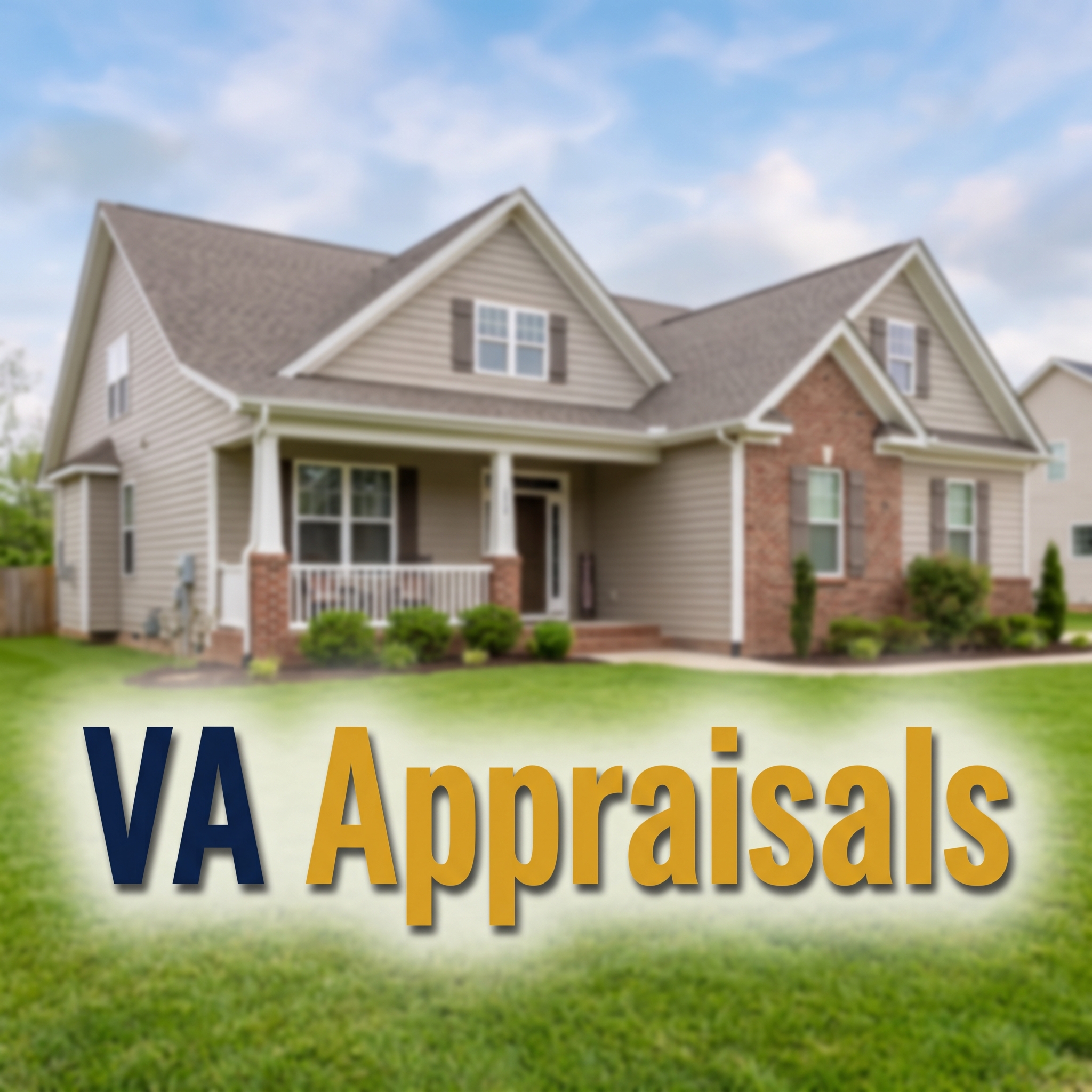
For veterans, active-duty service members, and eligible surviving spouses, a VA home loan can be an excellent way to purchase a home. VA loans offer several advantages, including competitive financing options and, in many cases, no down payment. However, before a VA loan can be finalized, the property typically needs to go through a VA appraisal.
But what exactly is a VA appraisal, and how is it different from a conventional home appraisal?
A VA appraisal is an evaluation of a property’s market value and condition performed by a VA-approved appraiser. The appraisal helps determine whether the home is worth the amount being financed and whether it meets the U.S. Department of Veterans Affairs’ minimum property requirements.
Understanding the VA appraisal process can help buyers, sellers, and homeowners know what to expect.

What Is a VA Appraisal?
A VA appraisal is an independent assessment of a home’s value that is required when using a VA-guaranteed home loan to purchase or refinance certain properties.
The appraiser’s primary responsibility is to determine the property’s reasonable market value. To do this, the appraiser researches the local real estate market, analyzes comparable sales, considers the home’s characteristics, and evaluates the property’s overall condition.
However, VA appraisals have an additional purpose beyond determining value. The appraiser must also evaluate whether the property meets the VA’s Minimum Property Requirements (MPRs).
These requirements are intended to help ensure that a home is safe, sanitary, structurally sound, and suitable for residential living.
It is important to understand that a VA appraisal is not the same thing as a home inspection. A home inspection is generally much more detailed and is designed to identify potential defects and maintenance concerns. A VA appraisal focuses primarily on market value while also addressing the property’s basic eligibility requirements for the VA loan program.
Why Does the VA Require an Appraisal?
The VA appraisal provides important protection for both the veteran borrower and the VA loan program.
For the borrower, the appraisal provides an independent opinion of what the property is worth. If a buyer agrees to pay $300,000 for a home but the appraisal indicates a market value of $275,000, the difference can become an important issue during the transaction.
The VA also wants to ensure that the property securing the loan meets its basic property standards.
The purpose isn’t to guarantee that a home is perfect. Instead, the VA’s requirements are intended to help ensure the property is an acceptable residence and that significant health, safety, or structural concerns are addressed.
What Does an Appraiser Look At?
During the appraisal, the appraiser considers many characteristics of the property and surrounding area.
Some of the factors that may be considered include:
- The home’s location
- Lot size and characteristics
- Overall square footage
- Number of bedrooms and bathrooms
- Age of the home
- Quality of construction
- Overall condition
- Updates and renovations
- Garage and other improvements
- Finished living areas
- Functional layout
- Site improvements
- Comparable properties that have recently sold
The appraiser also examines the property for conditions that could potentially affect VA loan eligibility.
For example, concerns involving the roof, electrical systems, plumbing, heating, structural components, or other significant property conditions may require further attention depending on the circumstances.
The appraiser then considers all relevant information when developing an opinion of market value.
How Does it Determine Value?
One of the most important parts of the appraisal is the analysis of comparable sales, commonly called “comps.”
Comparable sales are recently sold properties that are similar to the subject property. The appraiser looks for homes that provide meaningful evidence of what buyers have recently paid for similar properties in the same market.
The appraiser may compare factors such as location, size, age, condition, bedroom and bathroom count, quality, and other relevant characteristics.
The closest home isn’t always the best comparable. A property farther away may provide better evidence of market value if it is more similar to the subject property and competes in the same market.
After analyzing the comparable sales and other market data, the appraiser develops an opinion of the property’s market value.
What Happens If the VA Appraisal Comes in Low?
One concern buyers sometimes have is what happens if the VA appraised value is lower than the purchase price.
For example, imagine a buyer agrees to purchase a home for $350,000, but the VA appraisal indicates a market value of $330,000.
This creates an appraisal gap of $20,000.
The buyer and seller may have several options depending on the circumstances. They could potentially renegotiate the purchase price, address the difference through an allowable arrangement, or reconsider the transaction.
The important point is that a low appraisal doesn’t necessarily mean the home is “bad” or that the buyer made a mistake. It means the available market evidence did not support the agreed-upon price at the time of the appraisal.
How Long Does a VA Appraisal Take?
The timing of a VA appraisal can vary depending on the property, market conditions, appraiser availability, and other factors.
Once the appraiser receives the assignment, they generally inspect the property, research comparable sales, analyze the market, and prepare the appraisal report.
The completed report is then submitted through the appropriate VA appraisal process.
Buyers should remember that an appraisal is only one part of the overall VA loan process. The lender may also require additional documentation, underwriting, inspections, and other steps before the loan can close.
Can a VA Appraisal Affect the Seller?
Yes. Although the appraisal is ordered as part of the buyer’s VA financing, the results can have an impact on the seller.
A property that has significant condition issues or appears overpriced compared with recent comparable sales may encounter challenges during the transaction.
Sellers can help prepare for an appraisal by addressing obvious maintenance concerns, keeping the property accessible, and providing information about significant improvements or renovations that may be relevant to the appraiser.
However, sellers should also understand that an appraiser’s job is to provide an independent opinion of market value. An appraiser cannot simply increase the value because the seller needs a particular price.
VA Appraisal vs. Conventional Appraisal
VA and conventional appraisals share many similarities. Both involve analyzing the property, researching the market, reviewing comparable sales, and developing an opinion of market value.
The major difference is that a VA appraisal also includes consideration of the VA’s Minimum Property Requirements.
This additional layer is intended to protect the veteran borrower and ensure that the property meets the basic standards associated with VA financing.
Because of this, homeowners and sellers should not assume that a VA appraisal is identical to a conventional appraisal.
Why Choose an Experienced Michigan Appraiser?
Real estate markets vary significantly from one area to another. Understanding local neighborhoods, market trends, property characteristics, and comparable sales is an important part of developing a credible appraisal.
For homeowners and borrowers in the Grand Rapids area, working with an experienced local appraisal company can provide valuable insight into the market and the appraisal process.
Whether you are purchasing a home with a VA loan, refinancing an existing property, or simply need an independent opinion of market value, choosing an experienced appraiser matters.
Need a Grand Rapids, Michigan Appraisal?
If you’re looking for a Grand Rapids appraiser to assist with your residential appraisal needs, Michigan Home Appraisal can help.
Our experienced appraisal professionals understand the importance of accurate, well-supported property valuations and the unique characteristics of the West Michigan real estate market. Whether you’re involved in a VA purchase, refinancing, estate planning, divorce, tax-related valuation, or another real estate transaction, an independent appraisal can provide valuable information about a property’s market value.
Contact Michigan Home Appraisal today to learn more about scheduling a professional home appraisal in Grand Rapids and throughout Michigan.


Leave a Reply
Your email is safe with us.